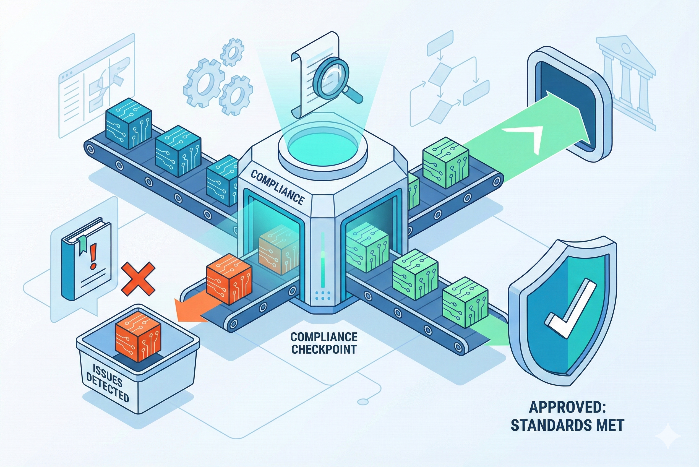
In today’s data-driven world, regulations are constantly evolving to keep pace with technological advancements and protect consumer privacy. For businesses across all industries, from finance and retail to healthcare and beyond, ensuring compliance with these regulations is no longer optional; it’s a necessity. This is where compliance testing comes in – a rigorous process of verifying that software, systems, and business practices adhere to established standards.
What is Compliance Testing?
Compliance testing involves a series of systematic checks to ensure your organization’s operations align with relevant laws and regulations. These tests can be specific to a particular industry, such as the General Data Protection Regulation (GDPR) for data privacy in Europe, or more general, like the Payment Card Industry Data Security Standard (PCI DSS) for secure credit card transactions.
Why is Compliance Testing Crucial Across Industries?
Here’s why compliance testing is critical for businesses of all sizes:
- Avoids Legal and Financial Repercussions: Non-compliance can lead to hefty fines, lawsuits, and operational disruptions. Automating compliance testing helps identify and address issues proactively, minimizing these risks.
- Protects Customer Data and Builds Trust: Consumers are increasingly concerned about data privacy. Effective compliance testing demonstrates your commitment to securing sensitive information and fosters trust with your customers.
- Maintains a Competitive Edge: Operating within legal boundaries and upholding ethical practices builds brand reputation. Businesses known for compliance gain a significant advantage in today’s competitive landscape.
Challenges of Traditional Compliance Testing
While traditional manual testing methods have served businesses for many years, they become increasingly inadequate in the face of ever-evolving regulations and complex digital environments. Here’s a deeper dive into the challenges businesses face with traditional compliance testing:
- Limited Repeatability and Consistency:
- Manual testing relies heavily on the skills and experience of individual testers.
- This subjectivity can lead to inconsistencies in test execution and interpretation of results.
- Re-running the same manual tests for regression purposes after code changes becomes time-consuming and prone to variations, potentially missing critical regressions.
- Difficulties in Maintaining Expertise:
- Regulations are constantly updated, requiring testers to stay abreast of changes across potentially diverse compliance frameworks.
- Continuous training can be expensive and time-consuming.
- Finding and retaining qualified compliance testers can be challenging, especially for niche regulations or in regions with limited talent pools.
- Integration Issues with Complex Systems:
- Modern software systems often involve complex integrations with third-party applications and cloud services.
- Manually testing all these interactions for compliance can be cumbersome and error-prone.
- Compliance testing needs to consider not just the software itself, but also data flows and access controls across various systems.
- Traditional methods struggle to effectively map these complex interactions.
- Limited Scalability and Coverage:
- As businesses grow and their digital footprint expands, the number of compliance requirements and systems to be tested also increases.
- Manual testing struggles to scale effectively to meet these growing demands.
- Manual testing typically focuses on pre-defined test cases, potentially missing edge cases or unexpected scenarios that could lead to compliance violations.
- Documentation Challenges and Audit Risks:
- Manually documenting test procedures and results can be time-consuming and error-prone.
- Inconsistent documentation makes it difficult to demonstrate compliance during audits.
- Recreating manual testing steps for auditors can be challenging, leading to potential delays and increased scrutiny.
- Reduced Visibility and Management Challenges:
- Traditional testing methods often lack real-time visibility into the testing process.
- Managers struggle to track progress, identify bottlenecks, and make data-driven decisions regarding compliance efforts.
- Manual testing results are often siloed, making it difficult to identify trends and proactively address potential compliance risks before they escalate.
- Impact on Innovation and Agility:
- Time-consuming manual testing can slow down development cycles and hinder innovation.
- Businesses may be hesitant to deploy new features or functionalities due to the additional compliance testing burden.
- Traditional testing methods lack the flexibility to adapt quickly to changing regulatory requirements or business needs, potentially delaying product launches or causing operational disruptions.
How Automation Revolutionizes Compliance Testing
Automation tools are transforming the compliance landscape by addressing the limitations of manual testing:
- Enhanced Efficiency and Speed: Automation executes repetitive tests quickly and accurately, freeing up personnel for other crucial tasks. This significantly improves efficiency and reduces the time needed for compliance testing.
- Improved Accuracy and Consistency: Automated tests eliminate human error, ensuring consistent and reliable results across each test run.
- Scalability and Adaptability: Automation frameworks can be easily scaled to accommodate growing test volumes and adapt to evolving regulations.
- Comprehensive Test Coverage: Automation allows for running a broader range of test scenarios, providing more comprehensive coverage of compliance requirements.
- Detailed Reporting and Documentation: Automated tests generate detailed logs and reports, simplifying compliance audits and providing a clear audit trail.
Adding Value Through Automation
By addressing these challenges, automation in compliance testing brings significant value to businesses:
- Reduced Costs: Automation saves time and resources associated with manual testing, leading to a lower overall cost of compliance.
- Improved Risk Management: Proactive identification and mitigation of compliance gaps minimize the likelihood of legal and financial repercussions.
- Enhanced Security Posture: Consistent testing strengthens your security measures by continuously identifying and addressing vulnerabilities.
- Faster Time to Market: Automation streamlines compliance processes, allowing products and services to reach the market quicker.
- Increased Agility: Businesses using automation can adapt to changing regulations faster, maintaining compliance and avoiding disruptions.
Conclusion
In today’s complex regulatory environment, compliance testing is no longer an optional add-on. By embracing automation, businesses can achieve comprehensive, consistent, and cost-effective compliance testing. This not only minimizes legal and financial risks but also builds trust with customers, maintains a competitive edge, and allows businesses to operate with greater confidence and agility in the ever-evolving digital landscape.
In today’s data-driven world, regulations are constantly evolving to keep pace with technological advancements and protect consumer privacy. For businesses across all industries, from finance and retail to healthcare and beyond, ensuring compliance with these regulations is no longer optional, it’s a necessity. This is where compliance testing comes in – a rigorous process of verifying that software, systems, and business practices adhere to established standards.
What is Compliance Testing?
Compliance testing involves a series of systematic checks to ensure your organization’s operations align with relevant laws and regulations. These tests can be specific to a particular industry, such as the General Data Protection Regulation (GDPR) for data privacy in Europe, or more general, like the Payment Card Industry Data Security Standard (PCI DSS) for secure credit card transactions.
Why is Compliance Testing Crucial Across Industries?
Here’s why compliance testing is critical for businesses of all sizes:
- Avoids Legal and Financial Repercussions: Non-compliance can lead to hefty fines, lawsuits, and operational disruptions. Automating compliance testing helps identify and address issues proactively, minimizing these risks.
- Protects Customer Data and Builds Trust: Consumers are increasingly concerned about data privacy. Effective compliance testing demonstrates your commitment to securing sensitive information and fosters trust with your customers.
- Maintains a Competitive Edge: Operating within legal boundaries and upholding ethical practices builds brand reputation. Businesses known for compliance gain a significant advantage in today’s competitive landscape.
Challenges of Traditional Compliance Testing
While traditional manual testing methods have served businesses for many years, they become increasingly inadequate in the face of ever-evolving regulations and complex digital environments. Here’s a deeper dive into the challenges businesses face with traditional compliance testing:
- Limited Repeatability and Consistency:
- Manual testing relies heavily on the skills and experience of individual testers.
- This subjectivity can lead to inconsistencies in test execution and interpretation of results.
- Re-running the same manual tests for regression purposes after code changes becomes time-consuming and prone to variations, potentially missing critical regressions.
- Difficulties in Maintaining Expertise:
- Regulations are constantly updated, requiring testers to stay abreast of changes across potentially diverse compliance frameworks.
- Continuous training can be expensive and time-consuming.
- Finding and retaining qualified compliance testers can be challenging, especially for niche regulations or in regions with limited talent pools.
- Integration Issues with Complex Systems:
- Modern software systems often involve complex integrations with third-party applications and cloud services.
- Manually testing all these interactions for compliance can be cumbersome and error-prone.
- Compliance testing needs to consider not just the software itself, but also data flows and access controls across various systems.
- Traditional methods struggle to effectively map these complex interactions.
- Limited Scalability and Coverage:
- As businesses grow and their digital footprint expands, the number of compliance requirements and systems to be tested also increases.
- Manual testing struggles to scale effectively to meet these growing demands.
- Manual testing typically focuses on pre-defined test cases, potentially missing edge cases or unexpected scenarios that could lead to compliance violations.
- Documentation Challenges and Audit Risks:
- Manually documenting test procedures and results can be time-consuming and error-prone.
- Inconsistent documentation makes it difficult to demonstrate compliance during audits.
- Recreating manual testing steps for auditors can be challenging, leading to potential delays and increased scrutiny.
- Reduced Visibility and Management Challenges:
- Traditional testing methods often lack real-time visibility into the testing process.
- Managers struggle to track progress, identify bottlenecks, and make data-driven decisions regarding compliance efforts.
- Manual testing results are often siloed, making it difficult to identify trends and proactively address potential compliance risks before they escalate.
- Impact on Innovation and Agility:
- Time-consuming manual testing can slow down development cycles and hinder innovation.
- Businesses may be hesitant to deploy new features or functionalities due to the additional compliance testing burden.
- Traditional testing methods lack the flexibility to adapt quickly to changing regulatory requirements or business needs, potentially delaying product launches or causing operational disruptions.
How Automation Revolutionizes Compliance Testing
Automation tools are transforming the compliance landscape by addressing the limitations of manual testing:
- Enhanced Efficiency and Speed: Automation executes repetitive tests quickly and accurately, freeing up personnel for other crucial tasks. This significantly improves efficiency and reduces the time needed for compliance testing.
- Improved Accuracy and Consistency: Automated tests eliminate human error, ensuring consistent and reliable results across each test run.
- Scalability and Adaptability: Automation frameworks can be easily scaled to accommodate growing test volumes and adapt to evolving regulations.
- Comprehensive Test Coverage: Automation allows for running a broader range of test scenarios, providing more comprehensive coverage of compliance requirements.
- Detailed Reporting and Documentation: Automated tests generate detailed logs and reports, simplifying compliance audits and providing a clear audit trail.
Adding Value Through Automation
By addressing these challenges, automation in compliance testing brings significant value to businesses:
- Reduced Costs: Automation saves time and resources associated with manual testing, leading to a lower overall cost of compliance.
- Improved Risk Management: Proactive identification and mitigation of compliance gaps minimize the likelihood of legal and financial repercussions.
- Enhanced Security Posture: Consistent testing strengthens your security measures by continuously identifying and addressing vulnerabilities.
- Faster Time to Market: Automation streamlines compliance processes, allowing products and services to reach the market quicker.
- Increased Agility: Businesses using automation can adapt to changing regulations faster, maintaining compliance and avoiding disruptions.
Conclusion
In today’s complex regulatory environment, compliance testing is no longer an optional add-on. By embracing automation, businesses can achieve comprehensive, consistent, and cost-effective compliance testing. This not only minimizes legal and financial risks but also builds trust with customers, maintains a competitive edge, and allows businesses to operate with greater confidence and agility in the ever-evolving digital landscape.
Compliance demands rigorous, repeatable validation across every release cycle. Our automation testing framework ensures specific compliance requirements like audit trails, access controls, data integrity checks, and validation protocols are verified systematically, reducing compliance risk while maintaining development velocity. Cut testing costs by up to 60% while catching bugs earlier in the development lifecycle. Mindfire’s end-to-end automation testing services transform QA from bottleneck to competitive advantage.