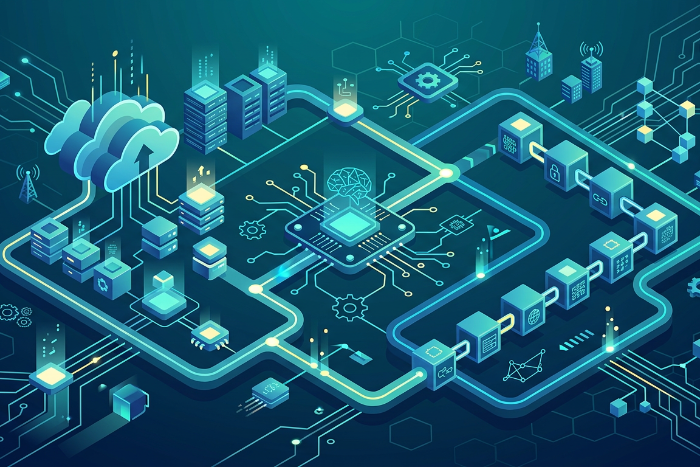
In 2026, emerging technology trends are no longer futuristic; they start becoming the world we live in. What once felt futuristic is now seamlessly integrated into our daily lives.
AI no longer responds; it anticipates. Systems don’t just react, they adapt. From optimizing city infrastructure to streamlining business operations, technology is working silently in the background, making everything smarter, faster, and more intuitive.
The biggest trend? Its invisibility. The most powerful innovations no longer seek attention; they simply are, quietly reshaping how we live and work.
But what exactly is driving this transformation?
Let’s take a closer look at the top technology trends defining 2026.
What Are the Top Technology Trends in 2026?
As technology increasingly shapes our lived experience, the question becomes: what innovations are powering this shift? Behind the seamless experiences and smart systems are a handful of powerful innovations that keep evolving rapidly and reshaping our industries.
These trends aren’t just enhancements; they’re redefining business operations, human interactions, and decision-making. From revolutionizing operations to elevating user experiences, they’re setting the tone for what the future looks like.
So, what are the forces driving this shift? Let’s break them down one trend at a time.
1. Artificial Intelligence (AI)
From diagnosing diseases to catching financial fraud, AI is built into the systems we now depend on. With the global market expected to hit $1.8 trillion by 2030, AI’s role is only growing. But with that growth, also comes new challenges like scaling, governance, and ethical concerns.
Agentic AI
These are autonomous systems that plan, act, and learn, like Microsoft Copilot, which proactively drafts emails, schedules meetings, and summarizes content. These agents reduce manual effort and can manage workflows across apps.
Generative AI
Generative AI tools like ChatGPT, Claude, DeepSeek, and Gemini can generate content from blogs to code to marketing assets. It’s helping professionals to focus on strategy instead of execution. Entire creative pipelines are now being built with generative AI at the center.
Synthetic Media
AI can now clone voices, create digital avatars, and generate realistic videos. Apps like TikTok use synthetic voice-overs, and tools like Synthesia help create corporate videos without actors. Although this also raises big questions about consent and trust.
AI-Driven Robotics
AI is giving machines the ability to navigate, adapt, and collaborate with humans in real-time.
For example, Boston Dynamics robots inspect dangerous environments, and Amazon’s bots optimize warehouse logistics with minimal human input.
AI Governance
As AI adoption scales, companies need strong governance to ensure fairness, transparency, and accountability. That means having systems in place to detect bias, track decisions, and maintain audit trails. Google’s Responsible AI principles are one example of how major players are addressing this challenge.
Are businesses prepared to adopt AI responsibly and at scale?
AI Use Cases are growing rapidly, but successful scaling requires a structured approach. Effective adoption requires skilled teams, clear data practices, and safeguards to ensure ethical AI use. As AI becomes more integrated into business operations, companies must ensure they are prepared to handle both its benefits and challenges responsibly.
Businesses today are actively embedding AI into near-term workflows, driving strong demand for custom, production-ready solutions. With over two decades of software engineering expertise, Mindfire Solutions delivers end-to-end AI development services spanning intelligent automation, predictive analytics, and NLP-powered applications. Their domain-driven approach ensures every solution is scalable, secure, and aligned with measurable business outcomes.
2. Blockchain
Remember when blockchain was just about Bitcoin? Those days are long gone. Blockchain has evolved into a powerful, decentralized, and distributed ledger technology that securely stores and verifies data across multiple systems.
How has blockchain evolved beyond cryptocurrencies in 2026?
What started as the backbone of digital currencies is now enabling secure data exchange in healthcare, ensuring product traceability in retail, and driving operational efficiency in finance. From supply chain transparency to medical record management, organizations are leveraging blockchain not just as a financial tool, but as a foundational technology for trust and automation.
What problems is blockchain solving for enterprises?
- Security: It safeguards data through encryption and decentralization, reducing vulnerability to breaches.
- Transparency: Immutable records allow for full traceability and auditability—crucial for sectors like logistics and healthcare.
- Decentralization: By removing intermediaries, blockchain enables faster, more cost-effective processes in areas like cross-border payments and contract execution.
Whether it’s a retailer ensuring product authenticity, a hospital sharing patient data securely, or a bank simplifying global transactions, blockchain is solving real-world problems where trust is essential. Real-world Blockchain use cases reveal how finance, healthcare, retail, and more are putting decentralized technology to work in meaningful ways.
How is blockchain being integrated with other technologies?
Blockchain is becoming even more powerful when combined with technologies like AI, IoT, and cloud computing:
- With AI, blockchain enhances the reliability of machine learning models by providing verified, tamper-proof data. It also enables smart contracts that self-execute based on AI-driven insights, automating complex decision-making.
- With IoT, blockchain secures data exchanges between connected devices. It ensures that data generated by sensors is authentic and can be trusted.
- With cloud computing, blockchain helps create secure, decentralized data storage and processing environments, allowing for better scalability and data governance.
As blockchain adoption accelerates across industries, businesses need more than off-the-shelf solutions to address complex, process-specific challenges. We bring proven expertise in blockchain development services, delivering smart contracts, decentralized applications, and private blockchain implementations built for scalability and real-world impact.
3. Automation
What if your business could run more smoothly while your team focused on other high-impact priorities? That’s exactly what automation is delivering in 2026 – not with sci-fi robots, but by intelligent, behind-the-scenes systems quietly transforming how work gets done.
What does automation look like in 2026?
In 2026, we’re deep into the era of hyperautomation. It’s no longer about automating individual tasks. Today, businesses are automating entire workflows end-to-end, using connected tools that not only execute but also analyze and optimize processes in real time. Automation has moved from being a helpful add-on to becoming a core operating system.
Which business processes are being most commonly automated?
Tasks that are repetitive, rule-based, and data-heavy are the prime candidates. Finance teams automate invoicing and reconciliation. HR uses automation for payroll and recruitment screening. Customer support relies on AI chatbots for instant query resolution. Even marketers now use real-time automation to tailor campaigns on the fly.
How is automation impacting workforce dynamics and operational efficiency?
Automation is shifting the nature of work. Routine tasks are handled by systems, allowing people to focus on creativity, problem-solving, and strategy. At the same time, operations are faster, leaner, and more accurate with fewer errors and greater agility across teams.
What technologies are driving the automation revolution?
Automation in 2026 is powered by the synergy of AI, RPA, and machine learning.
- AI brings intelligence, making decisions, analyzing trends, and adapting in real time.
- RPA handles repetitive actions with speed and precision.
- ML learns from data to continuously improve how systems operate.
4. Cloud Computing
AI, blockchain, and automation are grabbing headlines these days, but cloud computing is the technology that makes them all possible. It’s the quiet backbone helping businesses run faster, work smarter, and grow more efficiently.
Why is cloud computing central to digital transformation in 2026?
Cloud computing continues to be the backbone of digital transformation because it delivers what modern businesses need most—speed, flexibility, and real-time access to data. Whether it’s launching a new app overnight or enabling a remote workforce, the cloud empowers organizations to adapt quickly in a constantly changing market. In a world that demands agility, the cloud is what keeps companies competitive.
What are the emerging cloud models?
As cloud adoption matures, businesses are moving beyond a one-size-fits-all model. Hybrid cloud allows organizations to blend on-premises infrastructure with public cloud services. Multi-cloud strategies prevent vendor lock-in by spreading workloads across multiple providers for flexibility and resilience.
But the real game-changer in 2026? Edge computing, especially in the form of Edge AI. Instead of sending all data to the cloud for processing, edge computing allows AI tools to process data directly where it’s generated. The result: faster insights, reduced latency, and real-time responsiveness, even in remote or disconnected environments.
How is cloud enabling scalability, agility, and data-driven innovation?
Cloud platforms make it easy to scale resources up or down based on demand. This on-demand model gives businesses the agility to launch new products quickly, respond to market shifts, and enter new regions with minimal friction. Plus, with built-in analytics and AI tools, cloud systems turn raw data into actionable insights.
What are the challenges businesses face in cloud adoption?
Despite its advantages, cloud adoption presents challenges. Managing cloud expenditure has emerged as the top concern, with 82% of organizations citing it as their primary issue. Additionally, integrating legacy systems, ensuring data security, and avoiding over-reliance on a single provider are ongoing hurdles.
Addressing these challenges requires a strategic approach, encompassing robust governance, clear policies, and continuous monitoring to optimize cloud investments and mitigate risks. Partnering with an experienced cloud application development services provider helps businesses design, build, and optimize cloud-native applications that are secure, scalable, and cost-efficient. From modernizing legacy systems to implementing multi-cloud strategies, the right software development partner ensures your cloud investments deliver consistent, measurable value.
Curious how leading businesses are building smarter platforms in the cloud? Explore our Ultimate Guide to Cloud Application Development.
5. Internet of Things (IoT)
Picture this: Your factory equipment predicts maintenance needs before breaking down. Your city’s traffic lights adjust in real-time to reduce congestion. Your refrigerator orders milk when you’re running low. This is the reality of IoT today, integrating intelligence and connectivity into everyday tools and infrastructure.
What is IoT?
The Internet of Things (IoT) refers to the vast network of physical objects embedded with sensors, software, and connectivity technologies that enable them to collect and exchange data over the internet without direct human intervention. From smart home devices and wearables to industrial machinery and connected vehicles, IoT bridges the physical and digital worlds by allowing everyday objects to communicate, monitor, and respond intelligently in real time.
How are connected devices shaping real-time data-driven decisions?
IoT devices have evolved from passive data collectors to active decision-makers. In smart buildings, they optimize energy use on the fly; in agriculture, they trigger irrigation based on real-time soil conditions. The value lies not just in monitoring—but in enabling instant, informed actions that drive efficiency and reduce waste.
What industries are leading in IoT adoption?
Across industries, IoT is transforming operations beyond simple connectivity:
- Healthcare: Wearables monitor patients remotely, enabling proactive care.
- Logistics: Real-time tracking ensures precise delivery timelines.
- Manufacturing: Smart sensors predict equipment failures, slashing downtime by up to 45%.
What challenges are being faced in terms of interoperability and data security?
With all this innovation comes challenges. Interoperability – getting different devices and platforms to work together is still a major hurdle. And as more data flows between systems, security and privacy concerns continue to grow.
How does IoT intersect with AI and Cloud for enhanced performance?
What’s helping IoT reach its full potential is its synergy with other technologies. Paired with AI, it enables smarter automation and predictive insights. With cloud computing, it scales easily and supports massive data flows across locations. Together, they form a powerful digital ecosystem.
The true power of IoT isn’t in the devices but rather in the decisions they enable.
6. Cybersecurity
As businesses adopt AI and blockchain, cyber threats are becoming more sophisticated. In 2026, attackers are using AI to craft hyper-realistic phishing scams and exploring quantum computing’s potential to break existing encryption methods.
With tech advancing, how are cybersecurity threats evolving in 2026?
Cyberattacks are no longer limited to malware and brute-force attempts. AI-powered bots can now learn from past attacks and adapt their strategies in real time, making them more effective. Deepfake technology is being used for voice and video impersonation in high-value scams, targeting senior executives and financial transactions. Even trusted channels like messaging apps and collaboration tools are becoming attack vectors.
With the increasing use of interconnected systems like IoT and the cloud, the attack surface has expanded, making it difficult for organizations to secure every endpoint. As a result, security teams are shifting focus from reactive defense to proactive threat detection, using real-time behavioral analytics to identify and neutralize risks before they escalate.
What new frameworks are emerging?
To counter modern threats, new frameworks are leading the way. AI-powered security solutions use behavioral analytics to detect anomalies in real time. Zero Trust architectures are being used to continuously verify users through biometrics, device recognition, and contextual access controls.
How are organizations balancing user experience with security?
Security is no longer about disruption, but about seamless integration. Today’s systems operate in the background, identifying and mitigating risks without interfering with productivity. This balance ensures strong protection while maintaining a frictionless user experience.
How is blockchain contributing to secure systems and infrastructure?
Blockchain is reinforcing cybersecurity by creating tamper-proof, decentralized logs. In sectors like finance and energy, it ensures the integrity of critical data and systems. Its transparency and immutability make it a valuable layer in a multi-pronged defense strategy.
7. Spatial Computing
Spatial computing is shaping how devices understand and interact with the physical world. Although it is often confused with XR, it is broader in scope.
What is spatial computing?
Spatial computing is an emerging technology that seamlessly merges the physical and digital worlds, enabling computers to understand, interpret, and interact with three-dimensional environments in real time. Rather than confining user interactions to flat screens, it leverages technologies like augmented reality (AR), virtual reality (VR), computer vision, and AI to overlay digital information onto physical spaces in a natural, intuitive way.
How is spatial computing different from XR?
While XR focuses on immersive experiences, spatial computing is the foundation tech that allows machines to sense and interact with 3D environments. It powers XR, but also autonomous robots, smart glasses, and AI assistants.
How does spatial computing add value?
It enables context-aware computing. Devices can understand where they are, what’s around them, and act accordingly. This creates smoother interactions, smarter automation, and more intuitive user experiences.
Where is spatial computing making an impact?
- Retail: Smart mirrors and virtual fitting rooms.
- Industrial settings: AR-guided repairs and navigation.
- Smart homes: Devices that track movement to adjust lighting or temperature.
What challenges does spatial computing face?
Spatial computing needs high processing power, low-latency networks, and accurate environment mapping. Privacy is another concern—as devices track spatial behavior, data protection becomes critical.
8. Extended reality
Imagine this: Instead of looking at instructions on a phone, they appear directly on the machine you’re fixing. That’s XR technology—augmenting the real world with digital information or immersing you in entirely new realities.
What is XR?
XR, or Extended Reality, is an umbrella term for all immersive technologies that blend the physical and digital worlds. It includes Virtual Reality (VR), Augmented Reality (AR), and Mixed Reality (MR).
- AR (Augmented Reality): Like Snapchat filters for real life. It overlays digital elements onto what you see—directions on roads, price tags on shelves, or repair instructions on machinery.
- VR (Virtual Reality): Like stepping inside a video game. With a headset, you can practice surgery, explore an unbuilt home, or train for risky tasks in a safe environment.
- MR (Mixed Reality): The best of both. Digital objects interact with the real world—you can “place” a virtual engine on your actual workbench and walk around it.
In 2026, it’s gaining traction as a tool for businesses to enhance productivity, improve training, and innovate customer experiences. Whether it’s overlaying real-time data on physical objects or creating fully immersive simulations, XR offers unparalleled potential for improving operational efficiency and engagement.
How is XR transforming various industries?
- Retail: Customers can try on products virtually or see how furniture fits in their home before making a purchase.
- Training: Employees can practice tasks, from surgery to machine repair, in a safe, controlled virtual environment.
- Digital Publishing: XR enables immersive storytelling, allowing readers to engage with content in interactive ways.
What infrastructure or development tools are required for XR adoption?
For XR to reach its full potential, it requires a combination of lightweight AR glasses, robust 5G connectivity, and powerful development platforms. These tools help create seamless, interactive experiences and ensure the technology can scale across different environments.
What role does XR play in enhancing user experience and immersive interfaces?
XR makes technology feel more natural by blending digital content seamlessly into our real-world surroundings. Instead of tapping through screens, users can interact with virtual elements as if they’re part of the physical environment. Mixed Reality takes it a step further—letting people engage with both real and digital objects at the same time, which boosts collaboration and streamlines decision-making. While spatial computing helps devices understand the space around them, XR uses that knowledge to create experiences that feel intuitive, immersive, and engaging.
What are the key challenges holding XR back?
Despite its promise, XR faces several hurdles. High development costs and expensive hardware can limit adoption, especially for smaller organizations. Motion discomfort and user fatigue are ongoing issues in VR-heavy environments. Privacy and data security concerns arise due to the collection of spatial and behavioral data. Lastly, the lack of standardization across platforms makes integration more difficult and slows widespread adoption.
9. DevOps
DevOps bridges the gap between development and operations teams to deliver software faster and more efficiently. Automating everything from coding to deployment, it helps organizations keep up with the growing demand for quick, seamless updates without sacrificing quality.
What is DevOps?
DevOps is a modern software development methodology that bridges the gap between development and IT operations teams, enabling organizations to build, test, and deploy applications faster and more reliably. By combining cultural collaboration, process automation, and continuous integration and delivery (CI/CD), DevOps eliminates the traditional silos that slow down software delivery cycles.
Why is DevOps critical for rapid, scalable software delivery in 2026?
In today’s fast-paced world, users expect frequent and reliable updates. DevOps makes that possible by enabling continuous delivery and scalability. It streamlines workflows, reduces delays, and ensures that high-quality software can be released quickly and consistently.
How are organizations integrating AI into DevOps pipelines?
More and more teams are weaving AI into their DevOps pipelines to enhance speed and precision. AI-powered tools can spot issues before they cause problems, automate time-consuming tests, and keep an eye on system performance in real time. This shift from reactive to proactive problem-solving makes teams more agile and efficient.
What are the current best practices in CI/CD, testing, and release automation?
Today’s DevOps best practices center on Continuous Integration (CI), automated testing, and release automation. CI allows developers to merge code changes frequently without conflicts. Automated testing catches bugs early in the cycle, improving software stability. And with release automation, deployments happen faster and with fewer errors, making it easier to roll out features quickly and reliably.
How does DevOps intersect with Cloud, AI, and Automation?
DevOps thrives alongside cloud computing, AI, and automation. Cloud platforms offer the flexibility and scalability DevOps needs, while AI and automation handle repetitive tasks and performance monitoring. Together, these technologies supercharge DevOps workflows, helping teams deliver better software, faster.
Mindfire Solutions delivers end-to-end DevOps implementation services, helping teams build robust CI/CD pipelines, automate infrastructure, and integrate intelligent monitoring to accelerate delivery cycles. With deep expertise across leading cloud platforms and modern DevOps toolchains, their engineering teams ensure your workflows are optimized for speed, reliability, and continuous improvement
10. Quantum Computing
Imagine solving in seconds what would take today’s supercomputers thousands of years. That’s the power quantum computing promises to unlock.
What is quantum computing?
Quantum computing is a type of computing that harnesses the laws of quantum mechanics to solve problems too complex for classical computers. Unlike traditional computers that use bits (0 or 1), quantum computers use qubits, which can exist as 0, 1, or both at once through superposition. Combined with entanglement and interference, quantum computers can process vast amounts of data simultaneously, making them powerful for applications like drug discovery, cryptography, financial modeling, and AI optimization.
What are the key challenges with quantum computing?
The biggest hurdles are hardware stability, error correction, and scalability. Qubits are fragile and prone to errors from even minor environmental changes. Also, the field lacks standardized software tools, making development complex.
11. Sustainable Technology
In a world confronting climate change, sustainable tech is becoming a necessity.
What is sustainable technology?
Sustainable technology includes innovations designed to reduce environmental impact, conserve energy, and promote circular economies. Think of it as tech that benefits people and the planet.
How does it create value beyond just being eco-friendly?
It drives cost efficiency, brand trust, and long-term resilience. From energy-efficient data centers to carbon capture systems, sustainable tech can reduce operating costs and regulatory risks while appealing to eco-conscious consumers.
Where is sustainable tech being used most effectively?
- Energy: Solar, wind, and green hydrogen solutions are scaling up.
- Construction: Smart buildings and green materials reduce carbon footprints.
- IT & Cloud: Companies like Google and Microsoft are pushing for carbon-neutral data centers.
What are the key obstacles to adoption?
High upfront costs, regulatory uncertainty, and technology maturity remain challenges. Plus, measuring sustainability impact consistently across industries is still a work in progress.
12. Advanced Robotics
Robots are no longer confined to factories. They’re entering homes, hospitals, and even battlefields.
What makes robotics “advanced” in today’s context?
Advanced robotics refers to intelligent, adaptable machines that can perceive, learn, and make decisions. They often combine AI, machine vision, and real-time sensing to interact more naturally with the world.
How are they revolutionizing industries?
- Manufacturing: Precision and speed in repetitive tasks.
- Healthcare: Robotic surgeries and elder care.
- Agriculture: Automated harvesting and crop monitoring.
- Defense: Surveillance and autonomous operations.
What are the major challenges?
There’s concern around job displacement, safety, cost, and ethics—especially when robots are used in policing or warfare. Building human-robot trust is still an ongoing effort.
13. Autonomous Vehicles
We’re getting closer to a future where cars drive themselves. But it’s more complicated than it looks.
What are autonomous vehicles?
Autonomous vehicles (AVs) are equipped with sensors, cameras, and AI to navigate without human input. They range from partially automated systems to fully self-driving models (Level 5 autonomy).
What value do AVs bring to society?
AVs promise fewer accidents, reduced traffic congestion, and better mobility for the elderly and disabled. For businesses, AVs offer fuel savings, 24/7 operation, and reduced delivery times.
Where are they being tested or adopted?
- Logistics: Autonomous trucks and delivery robots.
- Ride-hailing: Companies like Waymo and Cruise are piloting driverless taxis.
- Urban planning: Smart city designs now factor in AV infrastructure.
Why hasn’t full adoption happened yet?
Regulatory roadblocks, technological limitations in edge cases, ethical dilemmas, and public trust are major hurdles. Weather, unpredictable human drivers, and infrastructure also pose significant challenges.
The Rise in Hardware Demand: Fuelled by AI
The AI boom isn’t just changing software – it’s driving massive demand for high-performance chips and infrastructure.
Why is AI creating a surge in hardware demand?
AI models, especially generative ones like GPT or image generators, require enormous computational power. This has led to a spike in demand for GPUs, TPUs, and high-speed memory. These components fuel data centers and edge devices.
Who are the key players driving this growth?
Nvidia, for example, saw record-breaking profits in 2025 thanks to soaring demand for its AI-optimized chips. Other chipmakers like AMD and Intel are also ramping up production. Cloud providers like AWS and Google are building custom AI hardware to stay competitive.
Where is this hardware being used?
- Data centers: To train and deploy AI models.
- Edge devices: For real-time AI in phones, cameras, and wearables.
- Autonomous systems: Cars, drones, and robots need powerful on-board chips for real-time decision-making.
What are the challenges tied to this growth?
- Supply chain bottlenecks: Shortages can delay innovation.
- High energy consumption: AI hardware is power-hungry, raising sustainability concerns.
- Cost barriers: Advanced chips are expensive, limiting accessibility for smaller players.
How These Technologies Intersect and Amplify Each Other
If there’s one theme tying together the top tech trends of 2026, it’s this: none of them operate in isolation anymore. The most significant innovations now emerge at the intersection of technologies like AI, IoT, and blockchain; not just coexisting, but working together to amplify outcomes.
It’s not simply about adopting a range of new tools. It’s about how you bring them together. For example, combining AI with automation doesn’t just increase efficiency—it enables workflows that can think, adapt, and improve over time. Similarly, while cloud computing powers scalability, pairing it with edge capabilities brings intelligence closer to where data is generated, helping industries that rely on speed and responsiveness.
A new dynamic that’s gaining importance in 2026 is interoperability which is the ability for diverse technologies to communicate, collaborate, and scale as a unified whole. As digital infrastructures grow more complex, the challenge isn’t just about innovation; it’s building cohesion across layers of software, data, and platforms.
The result? Digital systems that are smarter, faster, and more resilient by design. They’re also built to adapt as user needs and market conditions evolve.
But understanding this convergence is only the beginning. To turn that understanding into value, organizations need guidance, implementation expertise, and a long-term vision. That’s where the right technology partner plays a critical role.
Role of a Technology Partner in Driving These Trends
Technology trends alone do not drive transformation; how businesses implement them is what truly makes the difference. And hence, in today’s fast-evolving technological landscape, partnering with an experienced software development company is essential for businesses aiming to leverage emerging trends effectively.
- These partners act as translators, bridging the gap between business objectives and technical execution. While terms like AI, blockchain, and XR may seem like buzzwords, a skilled partner knows how to translate them into tangible solutions.
- They also serve as orchestrators. As highlighted earlier, the convergence of emerging technologies demands more than just adoption—it requires seamless integration. Achieving interoperability across technologies is complex and often beyond the capability of individual organizations. A reliable partner ensures your IoT sensors integrate with cloud analytics, your DevOps pipelines leverage AI for intelligent testing, and your cybersecurity evolves to address emerging threats without sacrificing compliance or performance.
- They become future-proofers. With technological advancements occurring on a quarterly basis, a capable partner anticipates shifts before they disrupt your business. This involves designing flexible architectures today—such as hybrid cloud environments that can later accommodate quantum computing or XR training modules ready for neural interface upgrades.
In this dynamic ecosystem, experience isn’t just beneficial – it’s essential. Successfully navigating complexity, avoiding common pitfalls, and delivering meaningful outcomes requires years of hands-on expertise. Few possess the level of proficiency that the teams at Mindfire bring. With decades of cross-industry experience in AI, IoT, cloud, and blockchain, Mindfire has guided organizations, from healthcare startups to Fortune 500 companies, through major technological transitions.
For organizations ready to move from strategy to execution, the real question isn’t whether to partner, but rather choosing the right partner to navigate the journey with you.
Conclusion
In 2026, every major technology—AI, blockchain, automation, cloud, IoT, cybersecurity, XR, and DevOps has matured. On their own, they’ve solved big problems. But their real power lies in how seamlessly they now work together.
That’s the shift: Technology no longer demands attention. It just works—invisibly, intelligently, and everywhere.
Businesses that succeed in this landscape won’t just adopt tools—they’ll build systems that are smart, scalable, and deeply connected.
Ready to leverage 2026’s tech trends? Talk to our experts or explore our full library of real-world case studies showcasing how we implement the top tech trends of 2026.